Tuesday, 3 January 2023

Monday January 2nd 2023

11:00 Lois and I venture out for a walk round the half-built estate where we moved to on October 31st  - the first time we've put our shoes on and gone outside since last Thursday, due to our both having bad colds.

To us it's a really odd looking estate. There is basically a mix of 4 different types of houses:

(1) Houses built, sold and occupied.

(2) Houses built and sold, but where the owners haven't moved in yet.

(2) Houses built, but still for sale.

(3) Houses still being built (the majority).

there are still scores of half-built houses on this estate
- what madness !!!!!

It's a weird place to live - Lois and I have never experienced anything like it in our long lives. As we pass one of the occupied houses a couple emerge, maybe in their 60's, and they introduce themselves as Jane and David. They say there are a lot of people here our age (and their age) and they point out a nearby house where the couple are planning to start a book group, which is a typical thing that we old people go for - sad isn't it haha! 

And Jane and David are so friendly, like everybody else we've met here.

Yes, it's one of the pluses of being here that everybody seems so friendly, and for the first time it dawns on me why this is so. Pretty much everybody who moves to this estate has no friends here, so they're anxious to make some, which is nice, and also so un-British, let's face it!

12:00 We come back and warm up with a hot soup and a cheese sandwich for lunch.

13:00 Steve, our American brother-in-law, has sent me another of the amusing weekly Venn diagrams that he monitors for us on the internet.


Yes, January bills could be a bit of a nightmare for Lois and me too. We're still waiting for our first gas-and-electric bill from British Gas - yikes!!!! 

I think on balance I think I'd rather be attacked by seagulls, even though that is also an awful memory of some of the holidays we've spent at St Ives in Cornwall. 

flashback to 2014: our last holiday in St Ives, where
residents and tourists outside fast-food outlets are regularly terrorised 
by seagulls on the look-out for a cheap meal: what madness !!!!

14:00 I'm a member of Lynda's U3A Middle English group so I take a quick look at the poem that the group will be looking at on Friday, when the group's first monthly meeting of 2023 takes place.

The poem is called "The Dietary" and is a 15th century work by John Lydgate - it was all about how to live a healthy life and it was a best seller in its time, being published in 3 rival versions by 3 of the major printers of the era.

John Lydgate (c.1370 to c.1471)

I decide to take a quick look at the first verse of the poem. I know from previous reading that the poem was very much an early self-help manual, designed to appeal to people who didn't want to pay money to expensive doctors ("leeches" as they were called in those far-off days). Then, as now, most people were hoping to be able to achieve good health the cheap way - just by living a healthy life, which makes sense to me!


Already you can see that the key to good health, according to Lydgate, is to practise moderation in all things, and be sensible. 

Here are some of Lydgate's pieces of advice: wear a hat so your head doesn't get cold, don't eat raw meat, drink wholesome drinks, and eat light bread. Also to leave the table while you still have an appetite for more, and never to have supper too late at night. It seems a bit unnecessary, however, to also advise against having carnal relations with "aged women", but Lydgate knew best, no doubt: perhaps he had tried it and he felt a bit "crook" afterwards, for some reason, perhaps coincidence. But I don't suppose the "aged women" were necessarily all that happy about it either - pity none of them said anything, perhaps in the comments section, if they indeed had that facility in the 15th century! 

What a crazy world they lived in in those far-off times !!!!!

21:00 We have a relaxing evening in front of the telly watching the first episode in a new series about a long-forgotten scandal from the 1970's: John Stonehouse, Harold Wilson's aviation minister and later Postmaster-General, who on an official visit to Czechoslovakia, stupidly slept with his Czech Government-supplied interpreter . He was, of course, immediately blackmailed into supplying the Czechs with UK "state secrets" in return for regular suitcases full of money. 


the Czech Government interpreter, seen here dining with Stonehouse
at a restaurant in Prague

the Czechs show Stonehouse a film of him in bed with his interpreter
and immediately start blackmailing him

Luckily for the UK, Stonehouse turned out not to know any really important "state secrets" that the Czechs didn't know already. The Czechs soon realised this and stopped paying him. 

the Czechs soon realised that Stonehouse "knew nothing"
and so they stopped paying him - poor Stonehouse haha!!!

Stonehouse's stupidity didn't stop there, however. He started sleeping with his secretary in London, and he used the Czech money to finance various disastrous business ventures. Eventually, faced with financial ruin, and with renewed threats to expose his sexual adventures in Prague, Stonehouse decided to fake his own death by flying to Miami and then walking into the sea, leaving his clothes and belongings on the beach.

What an idiot! And Lois and I wondered if the Stonehouse character in this entertaining drama might have been played convincingly by Mr Bean, to whom he bears a superficial resemblance.  But we're not completely sure - perhaps we should be told haha!

John Stonehouse, Harold Wilson's Postmaster-General

TV's "Mr Bean" (Rowan Atkinson)

What Lois and I come away with, however, is how much simpler the times were in those days. There was much more naivety around, more of a tendency to trust people's word, and to believe their pathetic "explanations" if there was the slightest whiff of scandal.

Happy days - gone for ever now, though !!!!!

22:00 We go to bed - zzzzzzz!!!!


Monday, 2 January 2023

Sunday January 1st 2023

Not much of a day for Lois and me because we're both suffering with heavy colds. However, Lois manages to take part in her church's two meetings today on zoom. She's muted, of course, so nobody can hear the coughing, which is probably for the best! 

So the main extraneous noises during the services turn out to be those made by the 3 or 4 dogs who attend "in person" at the village hall, or should that be "attend in dog"? I don't know, but maybe I should be told, and quickly!

flashback to August 2021: we visit the Village Hall
where Lois's church holds its services

And despite my own travails with the cold today, I manage to finish off the vocab lists for our U3A Danish group meeting on January 13th. I just need to check them now and then I can email them off to group members tomorrow.

In our little group, we're currently reading some short stories by Sissel Bergfjord about a set of passionate Danish vegetable growers who all have summer-houses attached to their little allotments, in a big allotment complex somewhere outside Copenhagen.

Insects are a constant threat and prove to be some of the most consistently prominent characters in the book, like the slug on the book's cover (see picture below), but ants, greenfly and other garden pests etc also make a big contribution and are a constant threat, which is a bit off-putting until you get used to it haha!


Danish writer Sissel Bergfjord

We've just finished one story about a woman who has run away from a violent partner, and who finds solace in a nice young man who owns the neighbouring allotment. 

And we'll be starting a new story this time, all about a woman who chain-smokes and goes through a lot of beer-cans from early morning. But she hides her smoking habit from her 8-year-old daughter, by always concealing her current cigarette "at thigh level". Luckily the daughter is easily fooled by such simplistic trickery!

But what a wonderful language Danish is! No wonder that English borrowed so many words and grammar rules from the Danes 1000 years ago, when we found ourselves living next door to a lot of them in the Danelaw areas of Eastern England. 


I've studied a lot of languages in my long life, but I'm pretty sure that Danish is the only language with a word for "thigh level" (lårhojde). What a pity that the English language neglected to borrow that word during Danelaw times - it has obvious potential, doesn't it! Or has it? Probably the jury is still out on that one.

The woman in our short story, the one with the naive 8-year-old daughter and the secret smoking habit,  seems to have a partner who is away on a business trip at the moment. He's sent her a text with a cheery "Wish You Were Here" message and a "smiley", but the woman notices from the photo he sends of his accommodation that there are not one but two wine glasses on the man's balcony. 

Uh-oh!! What's going on there, we wonder!


20:00 We have a quiet evening in front of the telly, watching the first of Alice Roberts' new series "Digging for Britain", which takes an annual look at the most exciting archaeological digs going on in the UK, region by region. This first programme is all about digs in the south of England.


There are lots of interesting items tonight, but our favourite is one about a mysterious matriarchal Iron Age culture in Dorset, the Durotriges tribe, who settled  in the area of present-day village Winterbourne Kingston, which is 20 miles west of Bournemouth. 


How did it come about that you got these minority women-dominated cultures popping up, so different from the norm?


The dig currently in progress at the site has discovered that whenever you find graves with high-status "grave goods", it's always in the graves of women. Like in this grave, where archaeologists found, among other treasures, a beautiful glass bead, coloured blue with cobalt oxide.


The dig leader says that, with the Durotriges tribe, power seemed to have been passed down through the female line.

Life wasn't all rosy for these high-status women, however. This one (see picture below) died before she was 25, but she had wonderful teeth. Archaeologists believe that she routinely must have eaten very few vegetables, and used to go instead for the really nice stuff, with the result that despite her dazzling smile, she probably died of scurvy from a Vitamin C deficiency - oh dear!

Poor high-status Durotriges woman!!!!!


22:00 We go to bed - zzzzzzzzz!!!!


Sunday, 1 January 2023

Saturday December 31st 2022

Today is a bit of a nothing-day for Lois and me, as we're both suffering from colds, especially Lois, whose cold is worse than mine, and every so often the quiet of our little home is ruptured by one of her mega-sneezes. My goodness !!!!

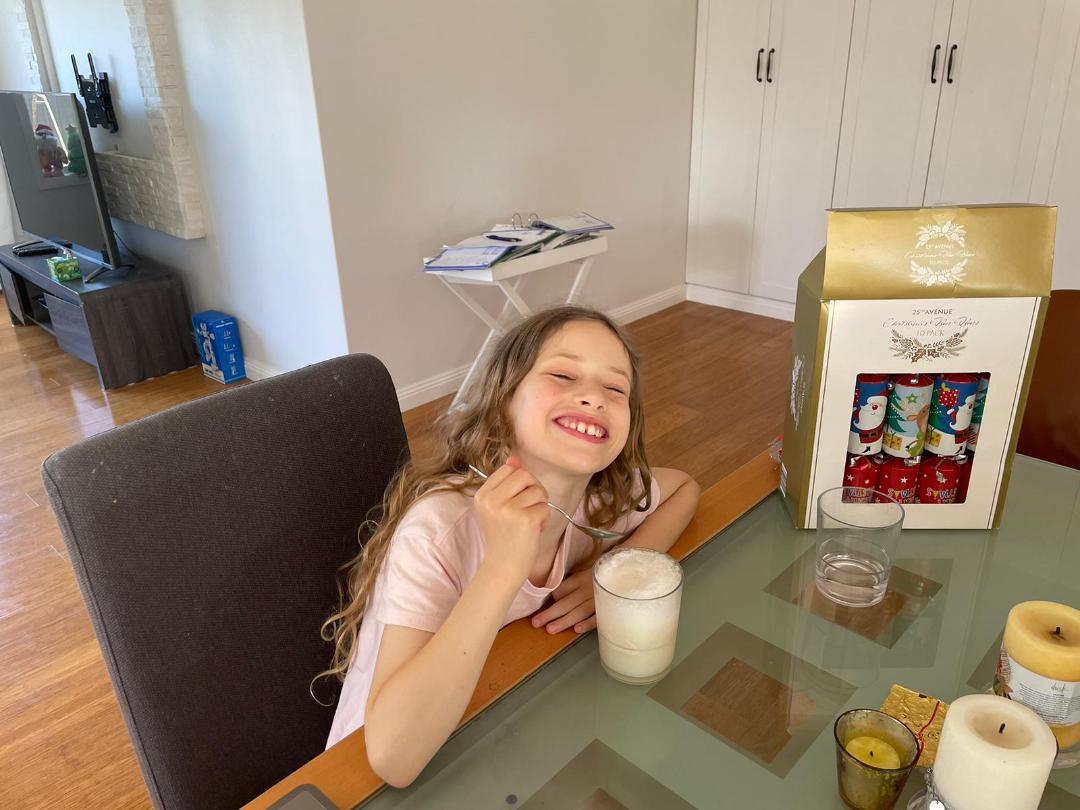
We cancel our usual weekend zoom session with our daughter Sarah, who, with her little family, sadly lives 9000 miles away from us in Perth, Australia. Sarah has also got a cold. But it was nice over Christmas that we've had a few photos from her of our beloved 9-year-old twin granddaughters, Lily and Jessica.

Jessica ....

...and Lily

the twins, here showcasing the junior sewing machine
that Lois and I gave them for Christmas

It makes Lois and me so happy to see them, and to see how they mirror so many of our own strengths and weaknesses - we realise they've got a lot of  both of those from Francis's side too, however: we're not that blinkered haha! Jessica is so into her reading and her artwork, and then there's the more restless Lily with her sense of fun, and we recognise all these traits in ourselves in one way or another, which is nice.

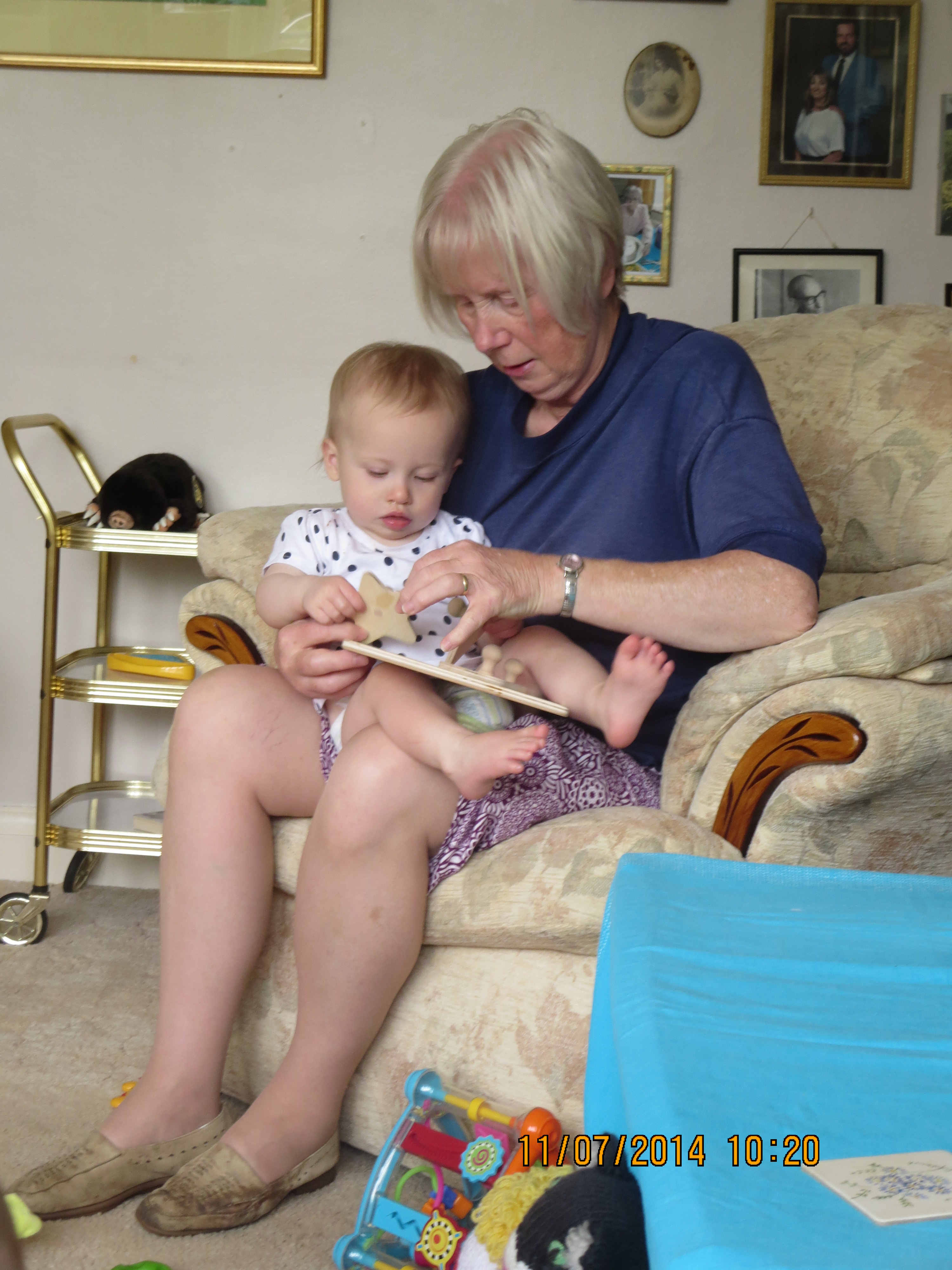
And we remember those happy days when Sarah used to bring them to us on Mondays and Fridays every week for us to look after while she was at work in Evesham and Francis was working online at home.

me and Jessica at Prestbury Bakery Stores

Lois and Lily in our living-room in Cheltenham


flashback to July 2014, when the twins were approaching
their first birthdays, showing their first interest in clothes

Happy days !!!!!

We don't manage much today, but we do manage to put a Morrisons grocery order in online, which is due to come late on Monday morning. 

Also I start to think about our U3A groups. Lynda, who leads the local "Making of English" group is going to be holding our first meeting of 2023 on Friday. And although we usually spend our meetings looking at medieval texts in Middle English, we're going to be doing something different this time, doing a bit of Middle English, but also discussing approaches to some of the many other forms of English, including both Anglo-Saxon and American English. So watch this space.

In a couple of weeks' time Lois and I will be hosting our next Danish group meeting, continuing to read Sissel Bjergfjord's book of short stories, all based around the lives and loves of a group of passionate Danish vegetable-growers, all working their allotments in the same little complex just outside Copenhagen.

Danish writer Sissel Bjergfjord with her book of short-stories
about the tempestuous lives of some passionate Danish vegetable-growers 

It's my job to produce vocabulary lists for the group of all the less well-known Danish words in these stories - yes, dear reader, you may even not know all of these words yourselves, so don't act all superior haha!

I decide to make a start today of doing vocab sheets for the next lot of pages that we'll be looking at during our next meeting.

It's nice that the stories avoid clichéd "neat endings" - in the first few of her stories that we were read, I was disappointed by this, but I've come to like the writer's realistic approach. In the current story a mother of two is being regularly beaten up by her partner, a passionate Mediterranean type called Sergio. 

The woman eventually gets away from him and hides herself away with the 2 children in a friend's cottage on the allotment complex A nice, unassuming, single young neighbour at the allotments, René, befriends her and offers to fix her faulty door-frame and the door lock. In return she helps him find his missing cat.

Later that evening the René calls round with a bottle of wine to celebrate the return of his cat, and you think that maybe the he and woman will end up in bed together. And maybe René will be the woman's rescuer, settle down with her and help her bring up the kids and ward off the violent Sergio.

But no! The evening ends, and with it Sissel's short story. René indeed just politely says goodnight, and the woman goes to her children's bedroom to check on them and tuck them in again, before going to bed herself.

That's real life, though, isn't it. No easy answers or pat solutions - oh dear!!!! Still, maybe René will call again  - let's hope so!


copyright Hazel O'Connor

20:00 We celebrate New Year's Eve by watching a film on live TV, something we don't normally do, so it qualifies as a celebration haha!


It's a bit of a weird film, but I think we enjoy it overall. 

It's all about Jack Malik, a struggling musician in rural Suffolk, and about his young manager, Ellie Appleton, who dotes on him, unrequitedly.


The weird stuff starts when Jack Malik wakes up after a road accident in 2004, to find himself in a world where nobody has ever heard of the Beatles and their songs, nor have they heard, confusingly, of Coca Cola or cigarettes, or Harry Potter: everything else seems to be normal, strangely. 

How weird is that?

Jack tries to capitalise on this situation by pretending that he has just composed all of the Beatles songbook that he can remember the words for, and he starts to gain worldwide fame as a result. He decides to dump his local Suffolk manager Ellie, who still carries a torch for him, in favour of an ambitious trans-Atlantic manager Debra, and he starts to play big stadium concerts in the US and UK. 

The premise of the film is that Jack eventually rejects all the fame and fortune, and goes back to Ellie, and the two live happily ever after, in obscurity in Suffolk, with Jack releasing all his supposed "compositions" onto the internet, downloadable for free. 

And there's a touching subplot about where the Beatles songs came from, in this scenario:  in the story, we discover that John Lennon did in fact write all his great songs, but that he also rejected fame and fortune, and, now in his late 70's, he is still alive and living a happy life with his partner, in obscurity, somewhere on the Lancashire coast. And that's why nobody has heard of him, or heard of the Beatles.


Does the plot all hang together, and does it really make any kind of sense? Of course not!!! But never mind, eh, it's New Year's Eve after all !

And it's nice to hear so many Beatles songs again, that's for sure, including "The Long and Winding Road", sung by Jack in a small Suffolk venue, before he became famous, being talent-spotted by Ed Sheeran.


I've probably told you before that I first heard this song in 1970-71 on a tannoy, when I was walking through a massive Tokyo department store during my student year there. Did I mention that it made me feel incredibly homesick, for England in general, but mostly for...  [Yes, yes, mostly for Lois - we know all about that! This is your final warning: don't ever bring that blasted song up again! - Ed]

flashback to 1971: me outside a Tokyo department store

22:00 We put ourselves, and 2022, to bed - zzzzzzzzzzz!!!!!