Monday, 29 March 2021

Monday March 29th 2021

10:00 We finish our boiled egg and toast breakfast - my god, we're late getting started today. We spent far too long in the shower and cleaning up afterwards. When will we ever learn?!!!

10:30 Suddenly we realise we have a load of letters and cards to post, and it takes us half an hour to get them ready, for some reason. Some have got to be weighed, including a birthday card going to the US, and then they must all be plastered with stamps, address labels and airmail stickers - what madness!!!!

We decide to go out and post them off, so we put them all in a bag for ease of carrying, and then take a walk over to the local football field, stopping at the post-box on the way round.


Lois posts our cards and letters in a typical local Royal Mail post-box:

Boris has announced some loosening of COVID lockdown restrictions starting from today, and it's interesting to see that many of the local old codgers are already taking advantage of this move to play some slow-motion tennis in the local tennis-courts adjoining the football field.

more freedom announced for taking part in outdoor sports 


local old codgers take advantage of the easing of restrictions
to play slow-motion tennis in the courts adjoining the football field - what madness!!!!

Lois and I pass quickly by these "flannelled fools" and make for the Whiskers Coffee Stand, run by the local pub The Royal Oak, a pub which like all the others is currently closed till later next month. It's nice and peaceful around the stand now - until recently they were using their own noisy electricity generator, but now they're hooked up to the power supply in the nearby Parish Council office, which means that it's nice'n'quiet as we sip our drinks, which is a bit of a treat!


we enjoy a flat white coffee (me) and a hot chocolate (Lois)
together with half a flapjack each - yum yum!

13:00 We come home and have lunch. I dip into one of the books I got for my birthday, "The Horse, the Wheel and Language" by David W. Anthony. 

I'm still only reading the first introductory pages, but Anthony is already letting slip an interesting fact - that people living in Northern Europe in ancient times (the Germanic tribes) were so scared of bears, that they couldn't bring themselves to say the proper word for them, which was something like the Latin word "ursus" (as in Ursa Major or Great Bear, the constellation etc) . 

a typical bear, seen here in Finland

That's why the Germanic peoples referred to them as "bears", which originally just meant "the brown ones" - people are thought to have been afraid that if you said the proper word, a bear would be likely to suddenly appear round the corner or looking over your shoulder, a bit like your boss, except that, unlike your boss, it might actually kill you.

It's like people referring to the Devil as "the Evil One", in case he turns up at the wrong moment.

flashback to my birthday - I unwrap my gifts, including Anthony's book 
(middle book of the three that I'm holding)

The Slavic peoples were also afraid they might meet a bear, so they called them by words that meant "the honey-eaters", for example "medved" in Russian and Czech. This form of euphemism has even been borrowed by Hungarian, which isn't even an Indo-European language, because the Hungarian word for bear is "medve" - they presumably borrowed that idea from the Slavs at some point. 

The "medv-" part of this word (which means "honey" in English) is related to our word "mead", which is a strong drink made from fermented honey and water. Simples!!!!

The peoples of Southern Europe weren't so scared of bears, however - they figured they weren't likely to ever see one, which makes sense, so they carried on using the proper word.

Who knew that? [I expect a lot of people did - Ed] 

Is the history of words not totally fascinating? Who would want to study anything else haha!

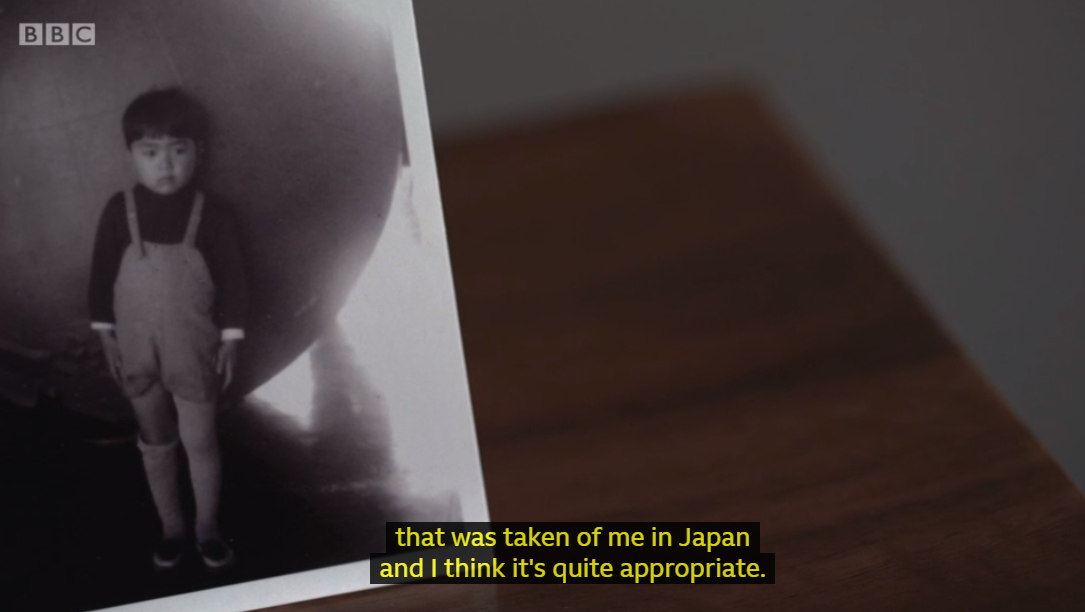
19:30 Lois disappears into the dining-room to take part in her sect's weekly Bible Seminar on zoom. I settle down on the couch and watch some TV, an interesting documentary in the "Imagine" series, all about Japanese-born writer Kazuo Ishiguro, who came to England as a young child of 5 years of age, and who has stayed here ever since.


Ishiguro was born in Nagasaki, but he moved to England as a small child, when his father got a job in Guildford, Surrey in 1960. 


As a young man he hitchhiked across the States, hoping to become a singer-songwriter. He'd been inspired by Tom Jones's recording of "The Green Green Grass of Home", and although the failed in his ambitions at the time, he has dabbled in song-writing ever since. 

What he likes about songs is that "they don't tell you everything - they leave some things to your imagination", and he carries this over into his novels, which are often described as "minimalist", or "elliptical". 

In the 1980's he wrote the novel "An Artist of the Floating World", set in Japan in the late 1940's, which is all about an artist, now in old age, who is trying to understand his past, when, under pressure from the military regime, he had created a lot of art now considered unacceptable in the democratic post-war Japan.  

Ishiguro says, however, that it wasn't meant to be a solely Japanese study - it was meant to apply to anybody in any country where values had changed - and there's plenty of that sort of thing going on nowadays, that's for sure!!!!


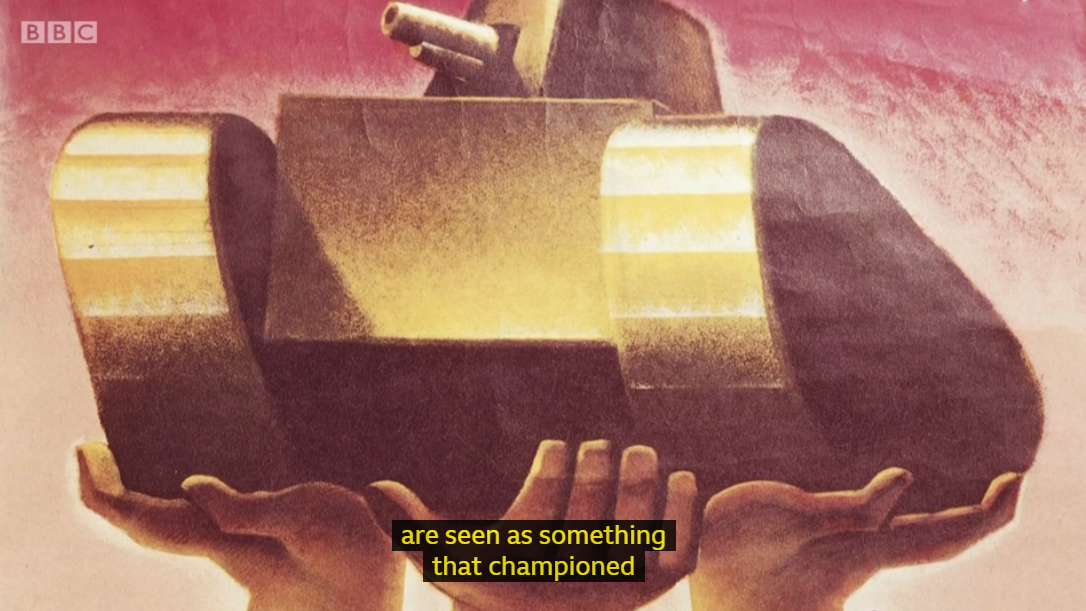



Poor Japanese artist !!! And as Ishiguro points out, the artist hadn't done anything very bad himself, compared with the regime he was working for. It was just the times he had lived in.

Fascinating stuff!  

And also very nostalgic for me to see scenes of Nagasaki during Ishiguro's childhood. I visited the city in the summer of 1971, during my time as a student at Hitotsubashi University, Tokyo.

flashback to 1971 - me in Nagasaki

21:00 Lois emerges from her seminar and we watch one of our favourite TV quizzes, University Challenge, the student quiz.


This is the second semi-final and the teams, especially Magdalene, Cambridge, are top-notch. Lois and I have a miserable evening again - we get a fair proportion of the questions right, but there are only two that the students don't get right as well - damn!

1. Born in the Scottish borders in about 1265, which Franciscan friar and theologian was given the Latin epithet, Doctor Subtilis?

Students: Roger Bacon
Colin and Lois: Duns Scotus

2. We recognise the comedy pop group the Bonzo Dog Doo-Dah Band, singing their recording of "The Intro and the Outro", which the students misidentify as The Pet Shop Boys. 


Not much of a result for Lois and me after a 30-minute quiz is it - my god! We feel our careers as "smart-asses" are possibly over now, at least until the next series: oh dear!!!

22:00 We go to bed - zzzzzzzzz!!!!!!


Sunday, 28 March 2021

Sunday March 28th 2021

06:00 I wake up and I think six o'clock is good enough, and that it's not worth trying to get a bit more sleep. It's only after about 60 minutes of lying there, while Lois sleeps on, that I suddenly remember that the clocks went forward an hour overnight last night, and that I "really" woke up at 5 o'clock - damn! I feel really short-changed by that - I need more sleep than that - damn (again) !!!!

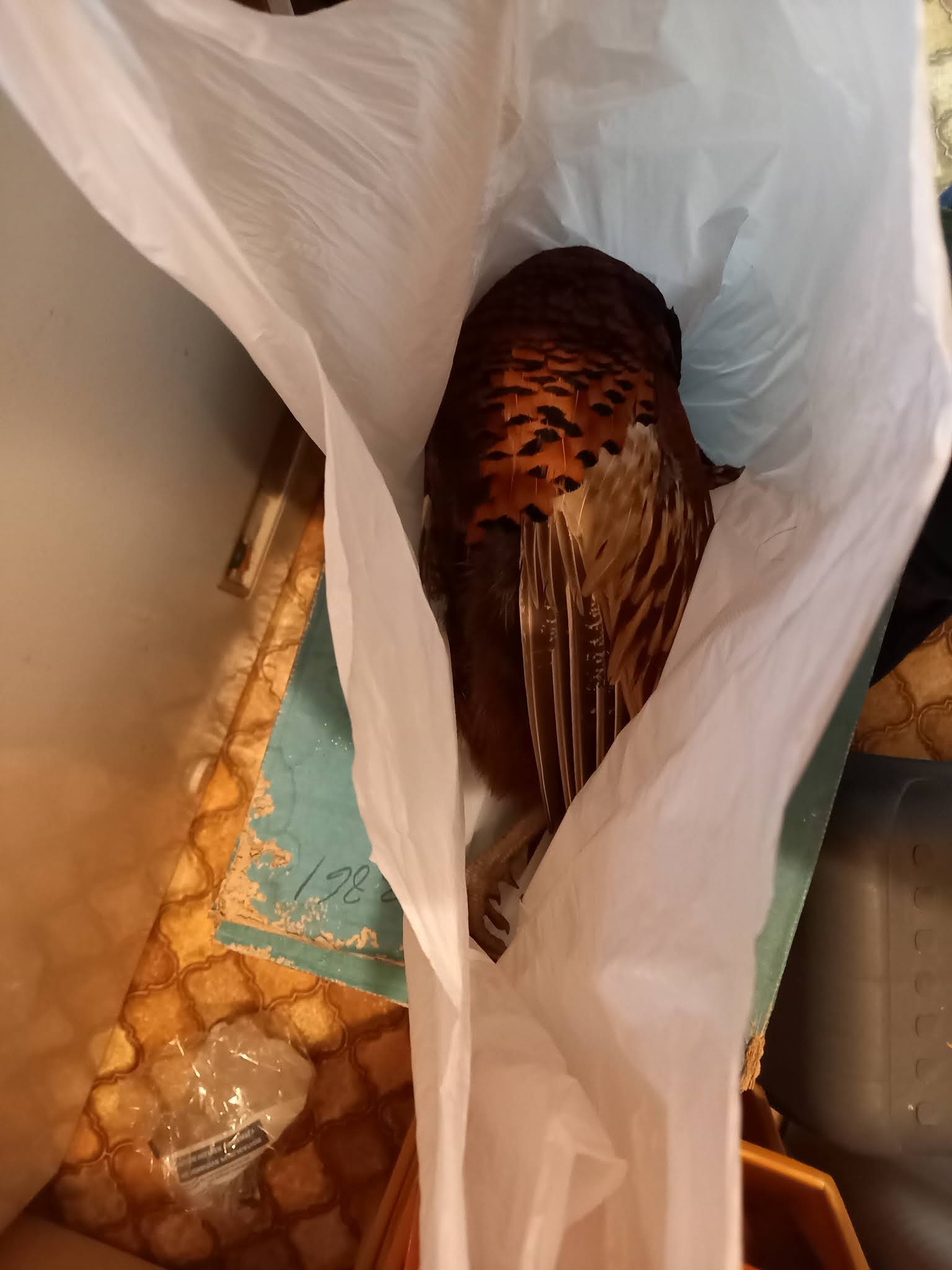
09:00 Our neighbour Bob rings the door-bell. I am up and about by now, although Lois is still upstairs getting dressed. Bob has brought a pheasant that somebody in his enormous family has shot. Oh dear - we regard these occasional pheasants as a bit of a mixed blessing: they're delicious to eat, but they've usually still got all their feathers and everything else on. We feel that we ought to use all the meat as a tribute to the dead bird, but in practice it's so time-consuming to prepare that Lois has decided we should concentrate on the breast in future.

I put the pheasant - what gorgeous birds they are -  in a plastic bag and hang it up in the larder for the time being.

the pheasant that one of our neighbour Bob's relatives has shot

Poor pheasant !!!!!

flashback: our neighbour Bob (right) in happier times - with his 
grandson, who was on leave from Afghanistan

10:30 Lois disappears into the dining-room to take part in the first of her sect's two worship services taking place today on zoom. I'm still feeling, and looking, slightly rough so I try to relax in the living-room. 

I get a phone call from Ursula, an elderly sect member, asking for Lois. She wants me to tell Lois that she would like to take part in today's second zoom worship service - it quickly becomes apparent that Ursula doesn't know about today's change to British Summer Time (BST). To make things easier I tell her that the second service will be starting at 11:30 am, even though it's actually starting at 12:30 pm (BST). I calculate that this will be less hassle than trying to explain to her about the clock change. 

What a nuisance the clock changes are! I envy our daughter Sarah in Western Australia, where they keep the clocks on the same time all year round. We have two clocks in our house that are set to Western Australia time, and they're the only ones we don't have to change twice a year: the time difference is 8 hours in winter and 7 hours in summer. 

On the other hand we have about 7 clocks and 3 radio-clocks on British time that I have to change manually every March and September. What a chore!!!!

example of a typical time difference between here and Western Australia: 
the white clock on the mantelshelf shows 12:30 am (Perth time), while the clock
on the wall shows 5:30 pm BST. This wall-clock also showcases 
Britain's pre-decimal coinage set that was in use prior to 1971

The Americans change their clocks twice a year as well, but I know that the March change happens usually a couple of weeks before our change, for some reason, and each year I'm keen to follow how well that goes in the US, using the Onion News website as my principal source. I find it's a useful pointer as to how the thing will go here a little bit later on. It's always a bit touch-and-go, and I always hold my breath a little. 

The twice-yearly custom of changing clocks also seems to bring out the best in Americans, I must say, with their "can do" spirit. I always check Onion News's vox pop sources, and I relish the homespun but canny wisdom of people's reactions over there.

There's a lot of wisdom to be garnered there in those typical comments, no doubt about that!

16:00 After a nap in bed, Lois and I have a cup of tea and a piece of my birthday chocolate cake on the couch. Lois has been reading her copy of "The Week", which gives a digest of last week's news from home and abroad.

She says that a developer has created an app which lets users sabotage their own Zoom calls, to give them an excuse to get off the line. The standard option is to choose one of several sound-effects that imitate a bad connection. If you are more adventurous, you can also opt for noises like a barking dog or a crying baby. And if you are particularly courageous you can choose the more extreme noises, such as "man weeping" or "somebody urinating".

My god, what a crazy world we live in !!!!!

20:00 We see a bit of TV, the latest edition of Antiques Roadshow, where members of the public bring along long-forgotten treasures and antiques from their attics to get them commented on, and valued by, the programme's team of experts.


Several things on tonight's show catch mine and Lois's eye. Who could resist this set of little figurines of cats playing billiards, for example, that programme expert Judith Miller valued at £2000 to £2500 ?


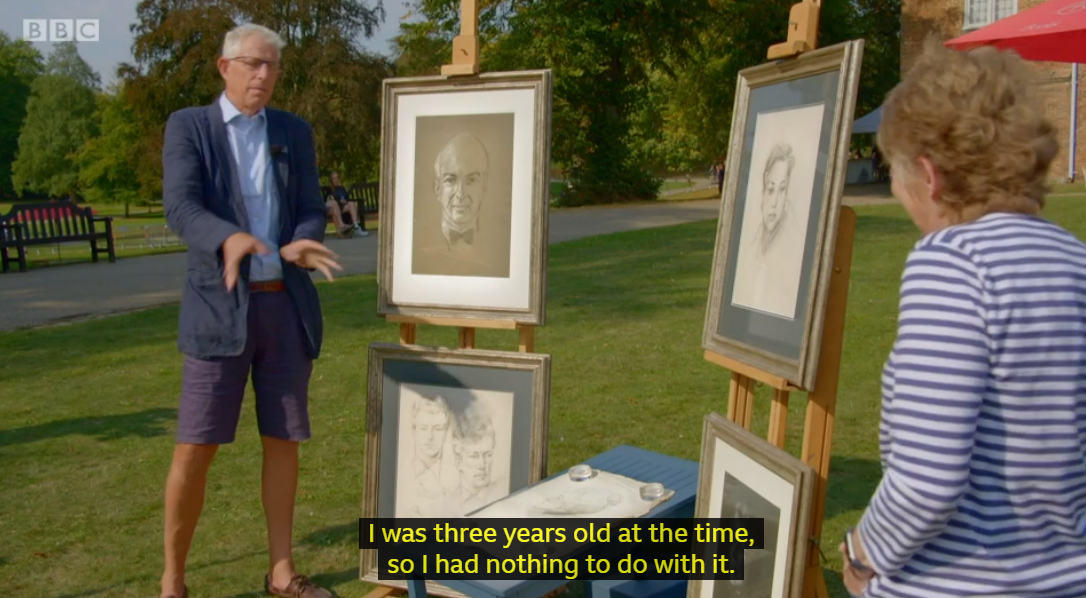
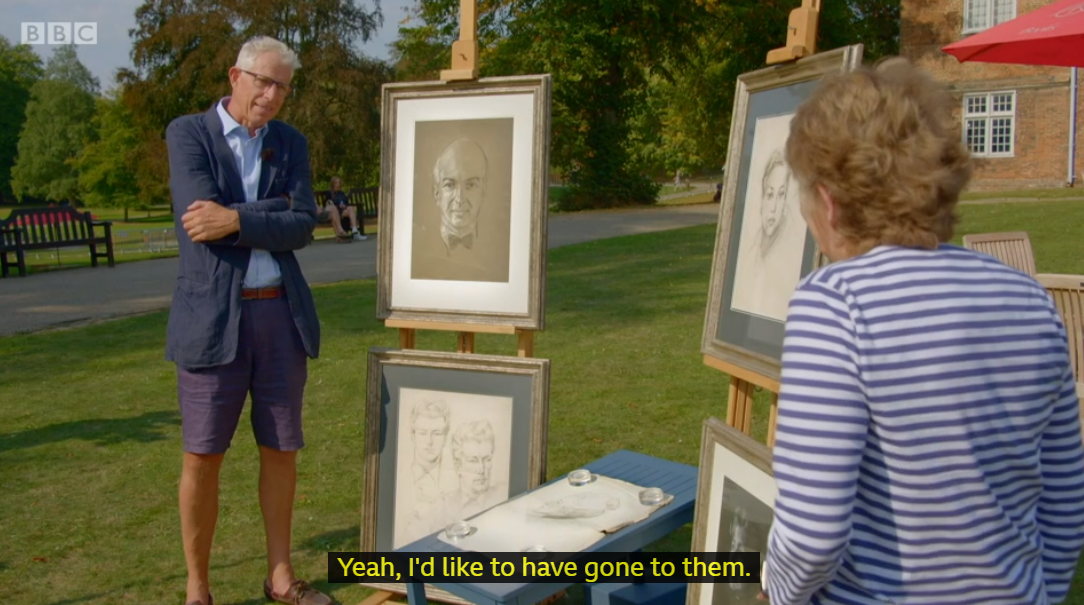
Another highlight for us is a set of sketches by the osteopath Stephen Ward, who was at the centre of the Profumo scandal in the early 1960's. Lois and I didn't know that Ward was a compulsive sketcher, and that he studied art in his youth. Besides being an osteopath he had been trained as an artist at the Slade, and he loved drawing people's heads while he was talking to them.

John Profumo, Secretary of State for War, and his wife Valerie

Christine Keeler, the model who became the mistress simultaneously of both
Profumo and a Russian naval attaché, Yevgeny Ivanov: hence the scandal

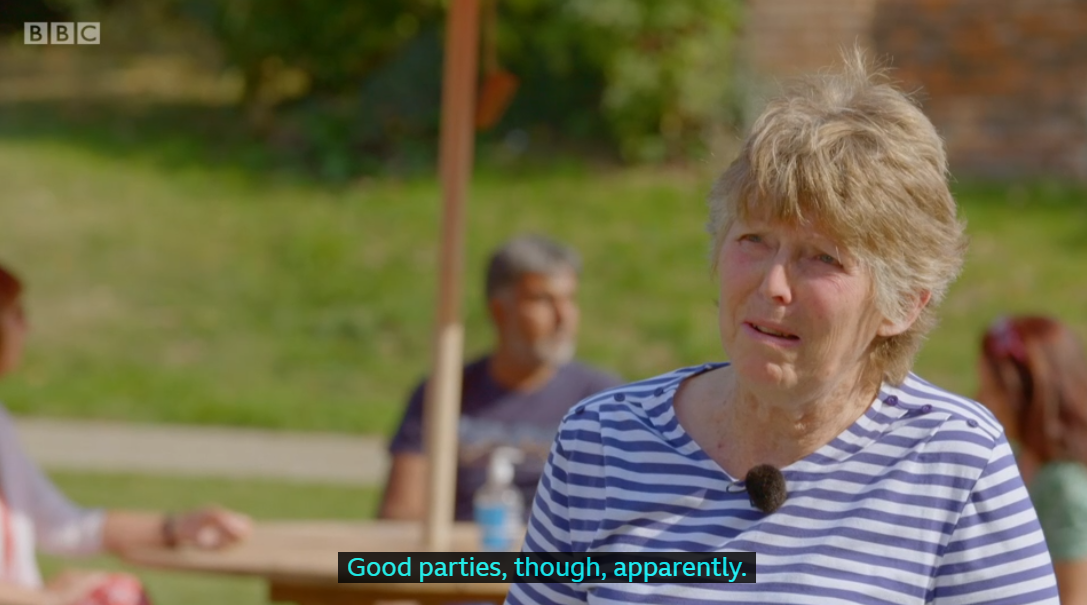
The woman who brought the sketches in said that she was given them many years ago by the chief clerk of a well-known celebrity lawyer, at a time when the Profumo scandal was at its height. The clerk had apparently put the sketches in a folder at the time and then forgotten about them. 


the sketch of model Christime Keeler, that Keeler herself
has confirmed was Ward's sketch of her


Lois and I always comment during Antiques Roadshow that we never have the slightest idea of what each item featured is worth. We thought these sketches might have carried a big price-tag but they turn out to be "only" £2000 to £3000, a substantial amount but not really a fortune. 

I don't think Lois and I would  ever have had careers as antiques experts, that's for sure - oh dear!

The programme's expert is at pains to stress that he wasn't himself personally involved in the scandal, which is nice to know!


22:00 Not for us, though, those parties - my god! We go to bed - zzzzzzz!!!!!


Saturday, 27 March 2021

Saturday March 27th 2021

 07:00 I get out of bed to make the tea: it's strictly Lois's turn but she's sound asleep - oh dear! Another brutally early start, even though we've been retired for 16 years. Sarah, our daughter in Perth, Australia is going to speak to us on zoom at 8:30 am so we've got to get washed and dressed, and breakfasted, also shaved (me) - oh dear (again).

08:30 The zoom call begins - as always a joy to speak to Sarah and to our 7-year-old twin granddaughters Lily and Jessie. Francis, Sarah's husband, is playing golf. The twins are bouncing around as usual, but we think they're a bit tired and they can't seem to concentrate too well: it's getting towards the end of their day down there, and near their tea-time. What a crazy planet we live on!!

Sarah with little Lily (7)

Lily shows us the certificate she got at school this week. They only have 4 more days of schooling next week before the Easter break. 

We play a card game called "Shopping" or "Shopping Cart" or something like that - another memory game, where you have a shopping list and about 40 or so cards each showing a food or drink item, but they're face down, so you have to remember where they are once they've been exposed: taxing at our age and at 9,000 miles distance. Still we play along - the real object is to let the twins beat us hands down, and we fulfil that objective handsomely - my god!

we play "Shopping Cart", the memory card-game

10:30 The delivery of groceries comes from the convenience store in the village. Lois has ordered some chocolate bunnies for the 3 children next door - she's so kind-hearted. I wish I was more like her!!! She has also paid for chocolate or wine for the volunteers at the store who work the system of deliveries for local old codgers. What a woman!

chocolate Easter bunnies that Lois has ordered for the 
3 young children next door - how kind she is !!!

She has also ordered 2 big chocolate Easter eggs for us, so all is not lost haha !!!!


10:30 The zoom call ends. We have a coffee and I read the opening pages of one of the books I got for my birthday yesterday, 


I'm grateful for the writer David W Anthony for reminding me about the two ways of forming the past tense of verbs in English: (1) adding -ed or -t to the present tense: e.g. curl - curled, or bend - bent. And (2) where we change the vowel of the verb, e.g. take - took.

We often call the second method "irregular", but the author reminds me that thousands of years ago this was the normal way of forming the past tense in Indo-European languages, i.e. by changing the vowel. You can see it in Ancient Greek, and also in Latin as well: e.g. in Latin, "he takes/captures" = "capit", while "he took/captured" = "cepit". Simples! The first method, of adding -ed etc, was thought up much later.

flashback to yesterday, I unwrap the 3 books I have received as birthday gifts

But what a crazy world they lived in, thousands of years ago, while they were inventing horses and wheels etc!!!!

11:00 Lois and I go for a walk down to Cheltenham Racecourse, passing the Royal Oak pub, temporarily closed at present because of the pandemic, but due to re-open soon with service limited to the garden at the back of the pub: but a hopeful sign - hurrah!


16:00 After a nap in bed we relax on the sofa with a cup of tea and a piece of my birthday chocolate cake (serves 8 haha!).

I look at my smartphone. Our other daughter Alison, who, with her husband Ed and their 3 children, has just moved into a big old Victorian house in Hampshire. It needs a huge amount of updating and renovating - oh dear! But we think Alison is really relishing the project, which she says is at least a 10-year one.

the old Victorian house that our daughter Alison and her family have just moved into

the "tennis court"

the bell system  used to summon the servants in the days 
when the house was a kind of mini-Downton Abbey - my god!

one of the fireplaces with a bell on each side to summon the servants

the smoky wood-burning system used to heat the house - my god (again) !!!

20:00 We settle down on the couch and listen to the radio, the third and final part of comedy writer David Mitchell's series on meetings ("Office meetings - don't you just hate 'em" is his unspoken subtext: I'll drink to that!).


I have to admit that Lois and I haven't heard the previous talks by David Mitchell in this series, because, speaking as two introverts, we dislike meetings just as much as David, so it would be just preaching to the converted. But we thought we'd listen to this last programme in his series because it has a historical reference: the Versailles Peace Conference of 1919. And his principal expert is Canadian history professor Margaret MacMillan. 

David Mitchell's principal guest expert, Canadian history professor Margaret MacMillan

For its sheer size, high-level participation (Presidents, Prime Ministers), duration (6 months) and scope (obvious!) you can't pick a better meeting to make fun of than the Versailles Peace Conference - we'll never see the likes of that one again, that's for sure!

The problems they faced were probably impossible to deal with: meeting at the end of a war in which 9 million had died, a devastated European continent and an uncertain world all around it. And they somehow had to manage to stop it happening again. Oh dear - that didn't work haha!

The conference was initially planned as a preliminary one to draw up terms to present to Germany and the defeated powers. Invitations went out to all the allies of the Western powers (a block which included not just the major European powers, but also countries like Japan, Thailand, Latin-American countries etc. It took so long for all the assembled delegates to come up with agreed terms to present to Germany, that what was originally intended as being a preliminary conference eventually morphed into the real thing - oh dear (again) !!!! 

And when the winning side eventually agreed on the terms they were going to present, they were so fed up with the whole thing that they went on to tell the Germans, Ottoman Empire, Austro-Hungary, Bulgaria etc that they would have to just accept the terms, no questions asked. And this of course just left Germany and its allies feeling resentful ever after.

Versailles was thus a meeting that got out of control, both as regards the number of participants and as regards time - it was supposed to take 2 weeks, but it took 6 months. We've all been to meetings like that - or at least felt like that: my god!!!!

Yes, nobody likes meetings that overrun, and people were very rude about the Conference at the time. The economist John Maynard Keynes, British Prime Minister Lloyd George's financial consultant, left the conference in disgust, calling it "a scene of nightmare". 

Of President Wilson and Lloyd George, Keynes wrote, "My last most vivid impression of the President and Prime Minister is as the centre of a surging mob and a babel of sound, a welter of eager, impromptu compromises and counter-compromises, all sound and fury, signifying nothing." 

Incidentally was Keynes guilty of anglophone-chauvinism here, i.e. Wilson and Lloyd-George seen as talking English (and therefore sense perhaps) but being surrounded by a bunch of foreigners all talking gibberish? But I'm not 100% sure - the jury's still out on that one! Perhaps Wilson and Lloyd-George were joining in with the gibberish as Keynes saw it. It's hard to be certain.

Anyway, Keynes thought that what the conference should have been doing was rebuilding Europe's economy, including rebuilding Germany's economy, and instead they were just thinking of revenge.

What a crazy world it was in those days - thank goodness we do things better today haha!

21:30 We go to bed on  Barry Humphries' programme of music from the jazz era, "Forgotten Musical Masterpieces", which by chance tonight includes a recording of a hit from 1919, the year of Versailles, "The World Is Waiting for the Sunrise".

Did the Versailles Peace Conference delegates ever hear it? Evidently not! Enough said !!!!!

22:00 Zzzzzzzz!!!!